A good sideboard is one of the hardest-working pieces in a home. It hides the clutter, holds the good plates, doubles as a bar at parties and gives you somewhere to put a lamp, a vase and that bowl you keep your keys in. Here's how to find one that fits your space and the way you live.
Sideboard, buffet, credenza: what's the difference?
The names get used interchangeably, and honestly, most shops don't stick to strict definitions. As a general guide:
- Sideboard: a long, low storage piece, usually with a mix of doors and drawers. Works in the dining room, living room or hallway.
- Buffet: traditionally a dining room piece for serving food and storing tableware. Often sits a little higher than a sideboard.
- Credenza: similar shape, usually a bit more streamlined, and often used in living rooms or home offices.
- Hutch: a buffet with a cabinet or shelves on top, for displaying crockery.
If you're shopping, don't get too caught up in the name. Focus on size, storage and where it's going to live.
What about "solid oak" buffets?
A lot of people search for a solid oak buffet, but in Australia that can mean two very different things. True oak is a European or American timber, and much of what's sold here is imported. Tasmanian oak isn't oak at all. It's a local eucalypt hardwood with a similar pale look.
If you love the light, natural look of oak, an Australian hardwood like Victorian ash or Tasmanian oak gives you a similar feel, grown and made here. Our timber comparison guide explains the differences.
Getting the size right
This is where most people go wrong. A few rough guides:
- Length: leave some breathing room on either side, at least 15 to 30 cm from the edge of the wall or any doorway. In a dining room, a sideboard that's a bit shorter than your table usually looks balanced.
- Depth: most sideboards are 40 to 50 cm deep. In a hallway or a tight dining room, go shallower so it doesn't eat into walking space.
- Clearance: in a dining room, try to leave around 90 cm between the sideboard and the back of the dining chairs so people can still get past when everyone's seated.
- Height: if you're hanging art above it, a lower piece gives you more wall to play with. If you'll use it for serving, a slightly higher top is easier on your back.
Tape the outline on the floor and the height on the wall before you buy. It takes five minutes and saves a lot of regret.
Think about what you're actually storing
Start with the stuff, not the style.
- Drawers are best for cutlery, napkins, placemats and all the small things that otherwise end up in a mess.
- Doors and shelves suit platters, serving bowls, bottles and bigger items.
- Adjustable shelves are worth having if you store tall things like jugs or wine bottles.
- Cable holes matter if the sideboard will double as a TV unit. Check before you buy.
Open every door and drawer if you can. Soft-close runners and solid timber drawer boxes are small details you'll notice every single day.
Choosing a style
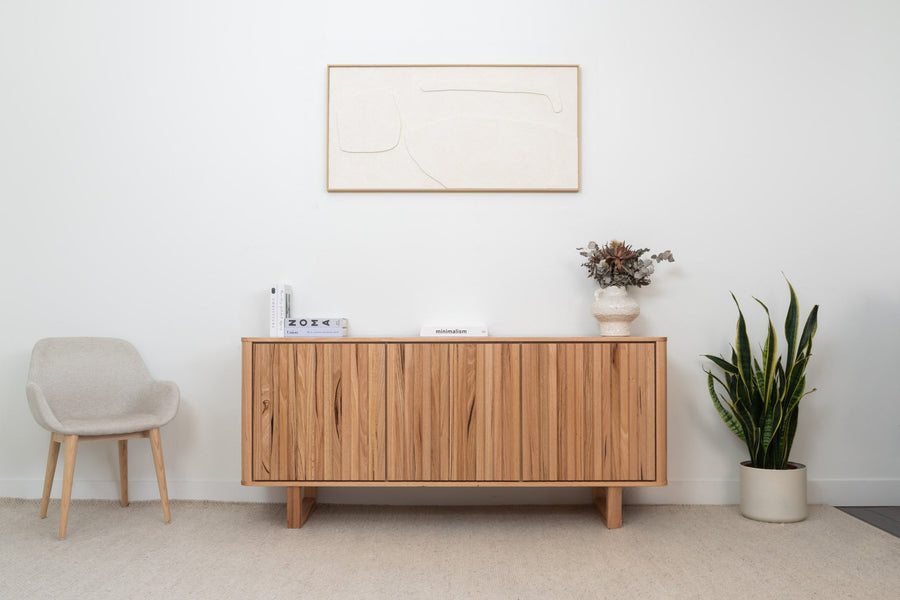
Light timber like Victorian ash keeps a room feeling open and calm, and suits coastal, Scandi and modern homes.
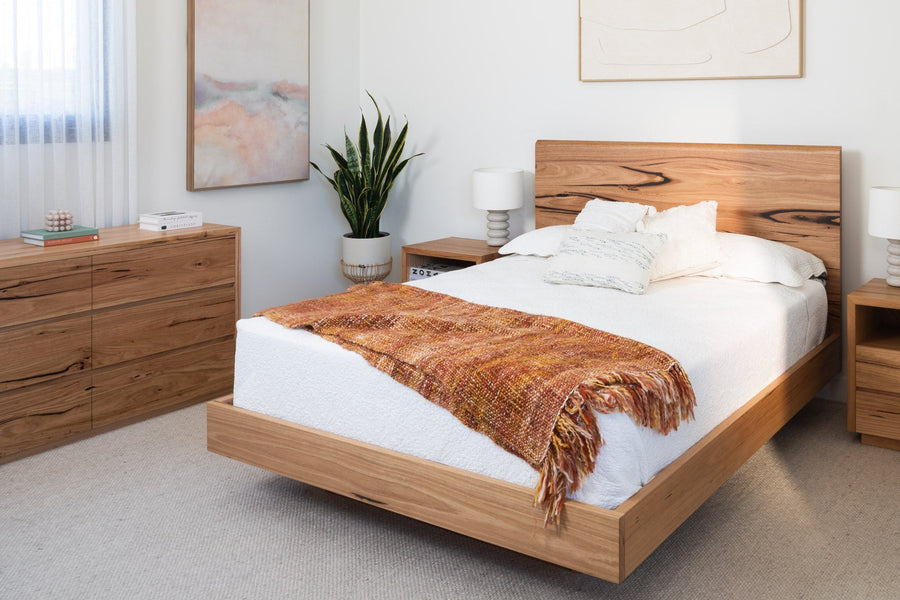
Darker timber like blackwood adds warmth and makes a sideboard the focal point of the room. The Yakka Blackwood is a good example.
Clean, minimal fronts let the grain do the talking. The Dion does exactly that: a long, low run of cupboards in solid blackwood or Victorian ash, made in 1.8 m and 2.1 m lengths and a slim 46 cm deep, so it suits dining rooms and hallways where space is tight.
Want something softer? The Yakka Signature sideboard in solid Tasmanian oak has gently rounded corners and lined drawers, sits a little higher at 86 cm for easy serving, and comes in six timber colours so you can match it to your floors or table.
Your sideboard doesn't have to match your dining table exactly. Pairing two complementary timbers often looks more considered than a perfect match.
How to style a sideboard
A few easy rules:
- Work in groups of three, and vary the heights. A lamp, a vase and a small stack of books is a classic for a reason.
- Lean art against the wall instead of hanging it, for a relaxed, layered look.
- Leave some empty space. A sideboard covered edge to edge looks cluttered.
- Use a tray to corral smaller pieces, especially if it doubles as a drinks station.
Why solid timber is worth it here
Sideboards get opened and closed thousands of times. Cheaper pieces made from particleboard often have doors that drop and drawers that stick within a few years. Solid timber holds hinges and runners firmly, and if the top gets marked, it can be sanded back and refinished.
Our Australian-made sideboards, including the Dion and Yakka ranges, are made from solid Australian hardwood and built in Australia. Each piece is made to order and handcrafted in Melbourne by skilled local makers, using sustainably sourced timber, and we plant a tree with every purchase. Each one is backed by a 5-year manufacturer's warranty.
Common questions
What is the difference between a sideboard and a buffet?
They're very similar. A buffet is traditionally used in a dining room for serving and storing tableware, while a sideboard can go anywhere in the home. Most retailers use the terms interchangeably.
How long should a sideboard be?
Leave at least 15 to 30 cm of space on each side. In a dining room, a sideboard slightly shorter than the dining table usually looks best.
How deep should a sideboard be?
Most are 40 to 50 cm deep. Go shallower for hallways and tight spaces.
Is Tasmanian oak real oak?
No. It's an Australian eucalypt hardwood with a similar pale colour to oak.